Fruit Syrup Cost per Cup: A Worksheet for Coffee and Boba Shops
October 23, 2026
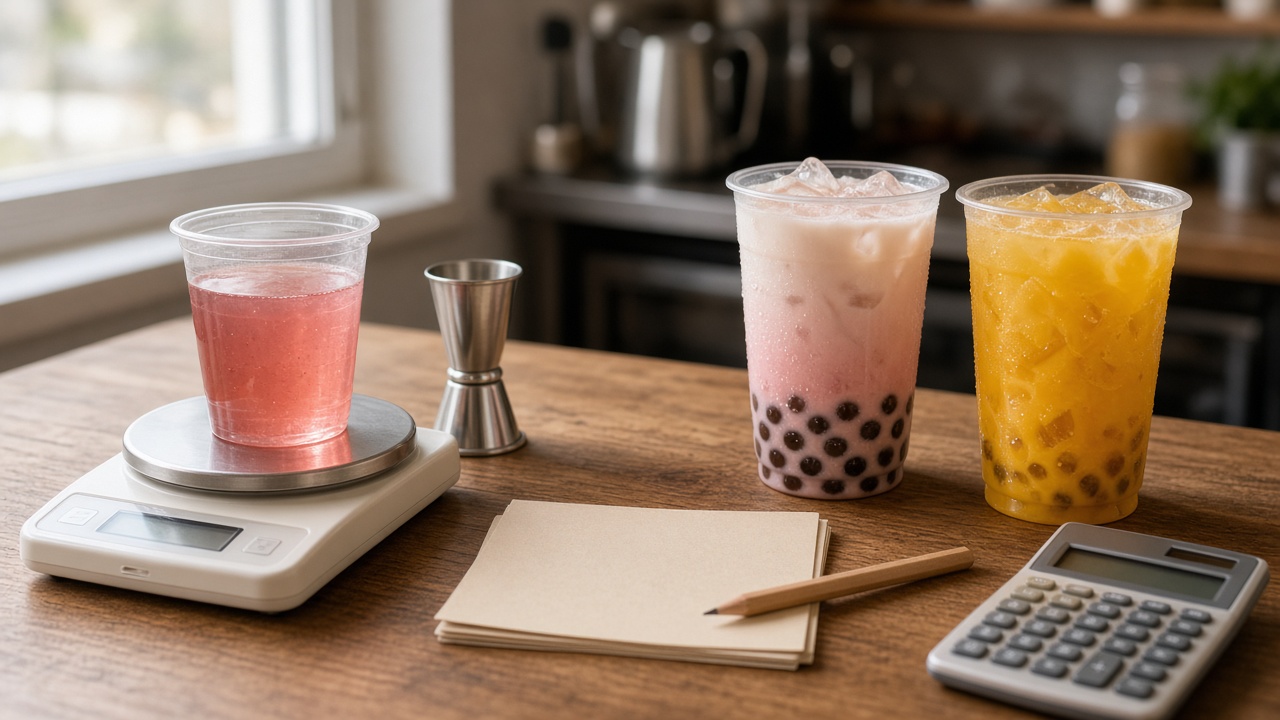
Do you actually know what the syrup in one strawberry milk tea costs you? Most shop owners know the price of a case, but not the cost of a single pour, and that is the number that decides whether a drink makes money.
The short answer: weigh one standard pour, divide your pouch price by the grams in the pouch, and multiply. Add the cup, lid, straw, base and toppings, and you have a real cost per cup you can set a menu price against. This worksheet walks through it step by step, without guessing.
How much syrup goes in a 16 oz and 24 oz drink?
Start with the pour, because every other number depends on it. The 16 oz builds below follow the ratios on our recipe pages. The 24 oz column is a starting point to test in your own cups, since ice and cup shape change the result.
Fruit milk tea
16 oz: 1.5 oz syrup, 10 oz brewed tea, splash of milk or creamer, ice
24 oz: start at 2.25 oz syrup, 15 oz brewed tea, milk or creamer, ice
Fruit latte (iced)
16 oz: 1.5 oz syrup, 8 oz milk, ice
24 oz: start at 2.25 oz syrup, 12 oz milk, ice
Fruit ade
16 oz: 3 oz syrup, ice, top with sparkling water
24 oz: start at 4 oz syrup, ice, top with sparkling water
Fruit slush
16 oz: start at 2.5 oz syrup, 4 oz water, 1.5 cups ice, blend
24 oz: start at 3.5 oz syrup, 6 oz water, 2.25 cups ice, blend
Once your team agrees on the taste, lock these numbers in. A recipe card behind the bar is worth more than any spreadsheet if nobody follows it.
Why should you weigh the pour instead of using ounces?
Because fruit syrup is heavier than water, so 1.5 fluid ounces of syrup weighs more than 1.5 ounces on a scale. Your pouch is sold by weight, so your math should be in grams too.
Put a cup on a kitchen scale, zero it, and pour one standard serving with the same tool your staff use, whether that is a marked squeeze bottle, a jigger or a pump. Do it three times and take the average. Write that number down as grams per pour for each drink and each size.
How do you work out the syrup cost per gram?
Divide what you paid for one pouch by the grams in it. For a 2kg pouch, that is the pouch price divided by 2,000. If you buy by the case, divide the case price by the number of pouches first, and include the shipping you paid on that order, spread across every pouch in it.
Syrup cost per pour = (pouch price / 2,000) x grams per pour
That one line is the heart of the worksheet. Run it for every flavor, because thicker flavors like mango often weigh a little more per ounce than lighter ones like lemon.
What else belongs in the cost per cup?
Syrup is only one line. A fair cost per cup includes everything that leaves the shop with the drink:
Syrup: from the formula above
Base: tea, milk, sparkling water or plain water, priced per ounce the same way
Toppings: tapioca pearls, jelly or popping boba, priced per scoop
Packaging: cup, lid or seal film, straw, sleeve or carrier if you use them
Ice: small, but worth counting if you buy bagged ice
Add them up for the 16 oz build, then again for the 24 oz build. Many shops find the larger size earns a better margin per cup because packaging does not double when the drink gets bigger.
How do you turn cost per cup into a menu price?
Pick the share of the menu price you want ingredients and packaging to take, then work backward. If you want drink costs at a set share of the price, divide your cost per cup by that share. Compare the result with what nearby shops charge for a similar drink, and adjust the build, not just the price, if the numbers do not work.
Small changes add up. Trimming a pour by a quarter ounce on a high volume drink, or moving a topping to an add-on, can matter more over a month than a price change customers notice.
Where does waste hide in fruit syrup drinks?
Waste rarely shows on an invoice, so it has to be counted on purpose. The usual leaks are free pouring during a rush, remakes when a drink comes out too sweet, syrup left in the corners of a pouch, and opened stock that sits too long.
Fix the first two with one pour tool per station and a two minute training on the recipe card. Fix the third by cutting the pouch corner wide and squeezing it fully into a clean, labeled dispensing bottle. Fix the last one with simple rotation: refrigerate after opening, write the open date on the bottle, check the best-by date on each pouch, and use the oldest stock first.
A quick weekly check helps. Compare how many pouches you opened with how many drinks of that flavor you rang up. If usage is creeping above what your recipe card predicts, someone is over pouring.
How often should you redo the worksheet?
Redo it whenever an input changes: a new supplier price, a new cup size, a new topping or a recipe tweak. Otherwise, a quick review each quarter is enough. Keep one sheet per drink with the date at the top so you can see what changed.
If you are comparing suppliers, run the same worksheet for each one using real pour weights. A cheaper syrup that needs a bigger pour to taste right may cost more per cup, not less. With Umma's Recipe, for example, shops often build their flavors around real fruit with no artificial flavors or colors, so the pour that tastes right is the number to plug in, not the label suggestion.
Frequently asked questions
Is cost per cup the same as cost per ounce of syrup?
No. Cost per ounce only tells you about the syrup. Cost per cup adds the base, toppings and packaging, which is what you need to price a drink.
Do I need a scale, or can I estimate?
A basic kitchen scale is enough and takes a few minutes. Estimating from fluid ounces usually undercounts, because syrup is denser than water.
Should I include shipping in the syrup cost?
Yes. Spread the freight on each order across the pouches in it, so your cost per gram reflects what you really paid.
How many pouches will I use in a month?
Multiply grams per pour by your weekly cups for each flavor, multiply by four, and divide by 2,000. Round up and keep a small buffer for busy weekends.
Where can I get bulk pricing for real fruit syrup?
Bulk pricing and lead times depend on the order, so ask the supplier directly. Umma's Recipe ships nationwide from New Jersey, with pallet shipping available.
Get a bulk quote or request free samples at ummasrecipe.com/wholesale.