What Is Real Fruit Syrup? A Simple Guide for Beverage Professionals
June 26, 2026
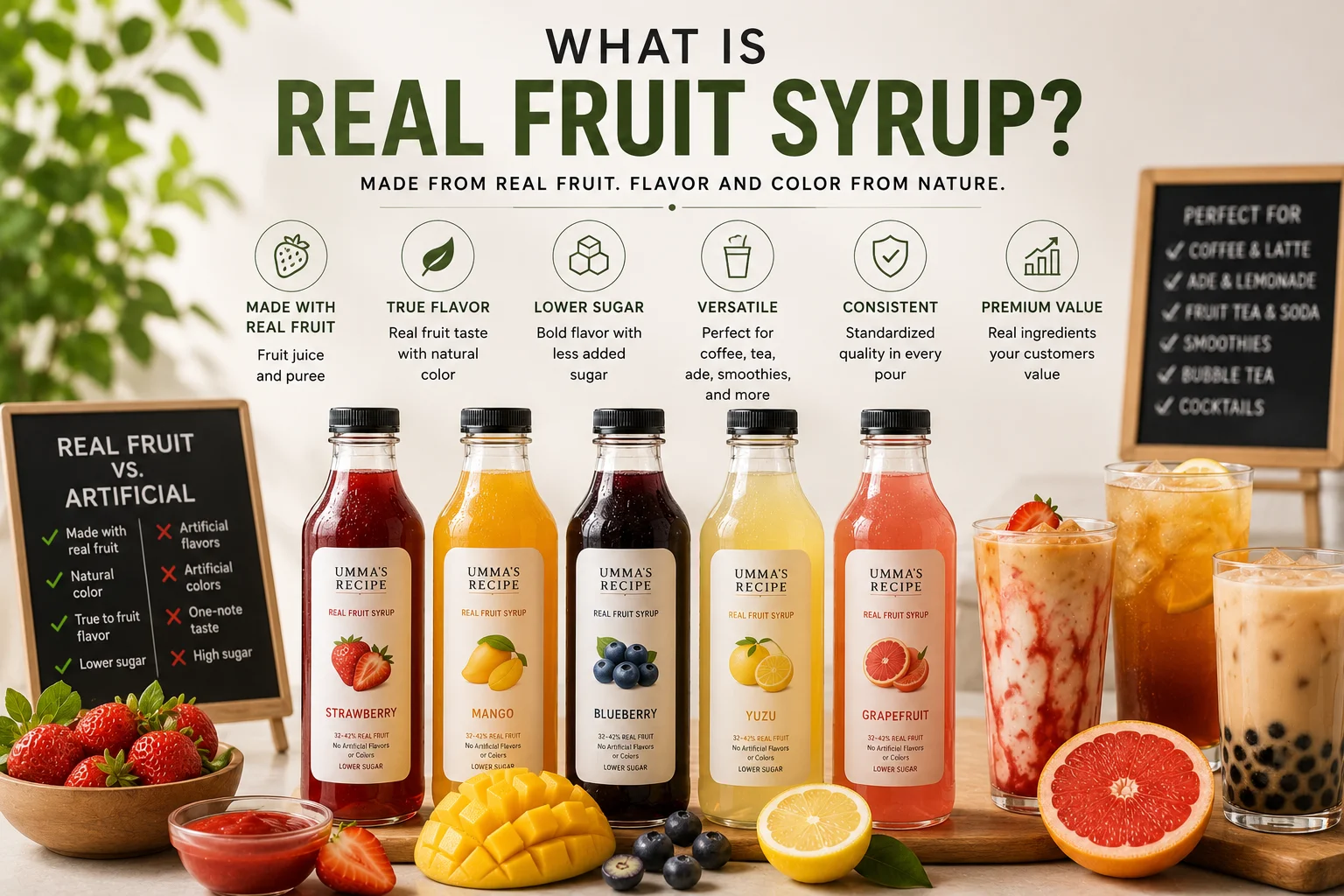
"Real fruit syrup" gets used loosely on a lot of labels, so it's worth being precise about what it actually means.
A real fruit syrup is a sweetened liquid concentrate made from actual fruit — fruit juice and puree — rather than from synthetic flavoring. In a true real-fruit syrup, the flavor comes from real fruit and the color is natural rather than artificial. That's the core difference from a conventional flavored syrup, which is essentially sweetened water carrying artificial flavor compounds and added color.
How real fruit syrup is made
The starting point is real fruit, processed into juice or puree and blended with a sweetener to create a stable, pourable concentrate. Because the fruit is doing the work, a quality real-fruit syrup carries genuine fruit character — the slight tartness, the layered notes, the natural color — instead of the single, candy-like sweetness of a synthetic flavoring.
A useful thing to look for is real fruit on the label. Premium real-fruit syrups are made with real fruit as a core ingredient. Umma's Recipe syrups, for example, are made with real fruit — which is what gives them true-to-fruit flavor and a natural color, rather than the flat sweetness of a synthetic flavoring.
How it's different from other options
It helps to place real fruit syrup against the things people confuse it with:
Versus artificial flavored syrup: Artificial syrup is flavored sugar water — synthetic flavor, often artificial color, sometimes high-fructose corn syrup. It's cheap and consistent but tastes one-dimensional, especially in milk-based drinks. Real fruit syrup tastes like the fruit because it's made from the fruit.
Versus fresh fruit or puree: Fresh fruit delivers the most authentic experience but adds prep, inconsistency, short shelf life, and waste. Real fruit syrup captures much of that real-fruit flavor in a shelf-stable, consistent, ready-to-pour format.
Versus fruit juice: Fruit juice is authentic but dilute, more perishable once opened, and harder to standardize across a menu. A real-fruit syrup is concentrated and stable, so a little goes a long way and every drink tastes the same.
Why beverage businesses use it
Real fruit syrup sits at a practical intersection of authenticity and operations, which is why cafés, bubble tea shops, bakeries, and bars reach for it. It gives them:
Real-fruit flavor and a natural color, which customers increasingly look for and will pay more for.
Consistency, so every drink tastes the same across staff, shifts, and locations.
Convenience and low waste, because it's shelf-stable and ready to pour, unlike fresh fruit or open juice.
A clean-label, real-fruit story — real fruit, no artificial flavors or colors — that fits the direction the whole category is moving in.
How to tell if a syrup is really "real fruit"
Three quick checks: read the ingredient list (real fruit, juice, or puree should be a named ingredient — not "natural and artificial flavors" and a dye), look at the color (natural rather than neon-uniform), and taste it in milk (real fruit stays rounded; artificial flavoring tends to turn sharp). If a supplier can't tell you what's actually in the bottle, treat that as your answer.
Common uses
Because it's versatile and consistent, real fruit syrup works across an entire beverage menu: real-fruit lattes and coffee drinks, ades and lemonades, sparkling sodas, iced teas and fruit teas, smoothies, bubble tea (boba), and cocktails and mocktails behind the bar.
The bottom line
Real fruit syrup is exactly what the name should mean: a syrup made from actual fruit, so the flavor comes from the fruit and not a lab. For a beverage business, it's the way to put genuine fruit — and a real "made with real fruit" story — into every drink while keeping the kitchen simple and consistent.