Best Real Fruit Syrups for Cafés in 2026: A Buyer's Guide
June 27, 2026
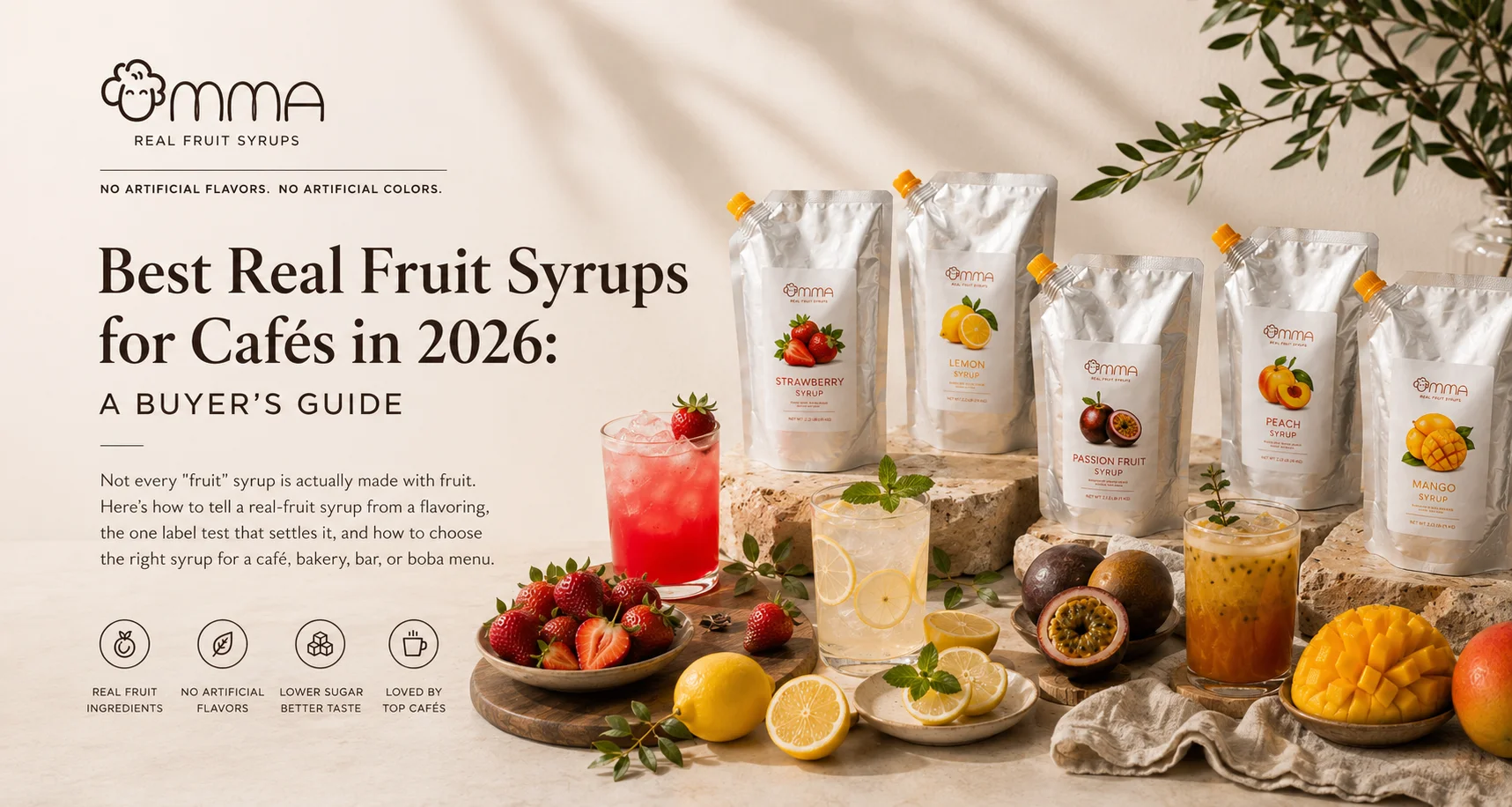
If you sell fruit drinks, the syrup you pour decides how real they taste — and increasingly, whether customers trust your menu. But here's the catch most operators miss: a lot of "strawberry" and "mango" syrups on the market contain no strawberry or mango at all. They're flavored sugar water. This guide explains what a real-fruit syrup actually is, how to spot one, and how to choose the right fit for your menu.
What is a real fruit syrup?
A real fruit syrup is a sweetened concentrate that is made with actual fruit — fruit, juice, or puree listed in the ingredients — so the flavor comes from the fruit itself rather than from a lab-made flavor compound. That sounds obvious, but it's the single biggest dividing line in the category, because most conventional "fruit" syrups are built on "natural flavor" and contain no fruit at all.
The one label test
You don't need to be a food scientist. Read the ingredient list and ask one question: is the fruit actually in there?
A real-fruit syrup names the fruit — "strawberry," "mango," "peach" — as an ingredient. A flavoring syrup names "natural flavor" or "natural and artificial flavors" and a color, but no fruit. Two bottles can both say "Strawberry Syrup" on the front; only one lists strawberry on the back.
While you're there, check two more things: the color source (natural color comes from fruit, vegetable juice, or things like beta-carotene and turmeric, while a bright, uniform shade often comes from artificial dyes such as Red 40 or Yellow 5 and 6), and the flavor source (natural vs. artificial). The cleanest options say "no artificial flavors" and "no artificial colors" — and back it up on the ingredient list.
What to look for when buying
Once you know real fruit is in the bottle, weigh these factors:
Real fruit as a named ingredient. The fruit should appear by name in the ingredients, not just on the front label.
No artificial flavors or colors. This is what customers reading labels are looking for, and it's what lets you make a menu claim you can stand behind.
Taste in milk and over ice. Real-fruit flavor tends to stay rounded in a latte and true over ice; artificial flavoring often turns sharp or candy-like. Always sample it the way you'll actually serve it.
Consistency batch to batch. A standardized, shelf-stable syrup pours the same drink across every shift and location — a quiet advantage over making purees from scratch.
Format and shelf life. Bulk, shelf-stable packaging means less waste than fresh fruit or open juice, and a longer window to use what you buy.
Supplier transparency. If a supplier can't tell you plainly what's in the bottle and where it's made, treat that as your answer.
How real-fruit syrup fits each menu
Coffee shops and cafés: real-fruit lattes, fruit ades and lemonades, iced and sparkling fruit teas, and seasonal refreshers. A real-fruit base gives a signature drink menu a story customers can taste.
Bakeries and dessert cafés: fruit sodas, ades, and fruit lattes that pair with pastries and lift average ticket without adding kitchen labor.
Bars and bartenders: cocktails and mocktails where a true-to-fruit syrup carries the drink instead of a one-note sweetener — consistent pours, every service.
Boba and bubble tea shops: in a clear cup, customers can literally see whether the fruit is real. A real-fruit syrup gives an authentic look and taste with the speed and consistency a rush demands.
What a real fruit syrup can't promise
Honesty builds trust, so it's worth being clear: a syrup is still a sweetened concentrate. Real fruit changes where the flavor and color come from — not the fact that syrup is a sweet ingredient you portion in small amounts. The right way to think about it is quality and authenticity of flavor, not a health claim. If a supplier is making sweeping "guilt-free" promises, read the label closely.
FAQ
Is "real fruit syrup" the same as fruit puree? No. Puree is closer to whole fruit but is more perishable and harder to standardize. A real-fruit syrup captures real-fruit flavor in a shelf-stable, ready-to-pour format.
How can I tell if a syrup has real fruit? Read the ingredient list. The fruit should be named as an ingredient — not just "natural flavor."
Do real-fruit syrups work in coffee and milk drinks? Yes. They're used across lattes, ades, teas, smoothies, boba, and cocktails. Sample in milk first to confirm the flavor holds.
About Umma's Recipe
Umma's Recipe makes real-fruit syrup for wholesale — made with real fruit, with no artificial flavors or colors, produced in Korea in an FDA-registered facility. The lineup is built for cafés, bakeries, bars, and bubble tea shops. Explore the flavors and wholesale program through the links below.