Real Fruit Syrup vs. Artificial Syrup: What Cafés Need to Know
June 26, 2026
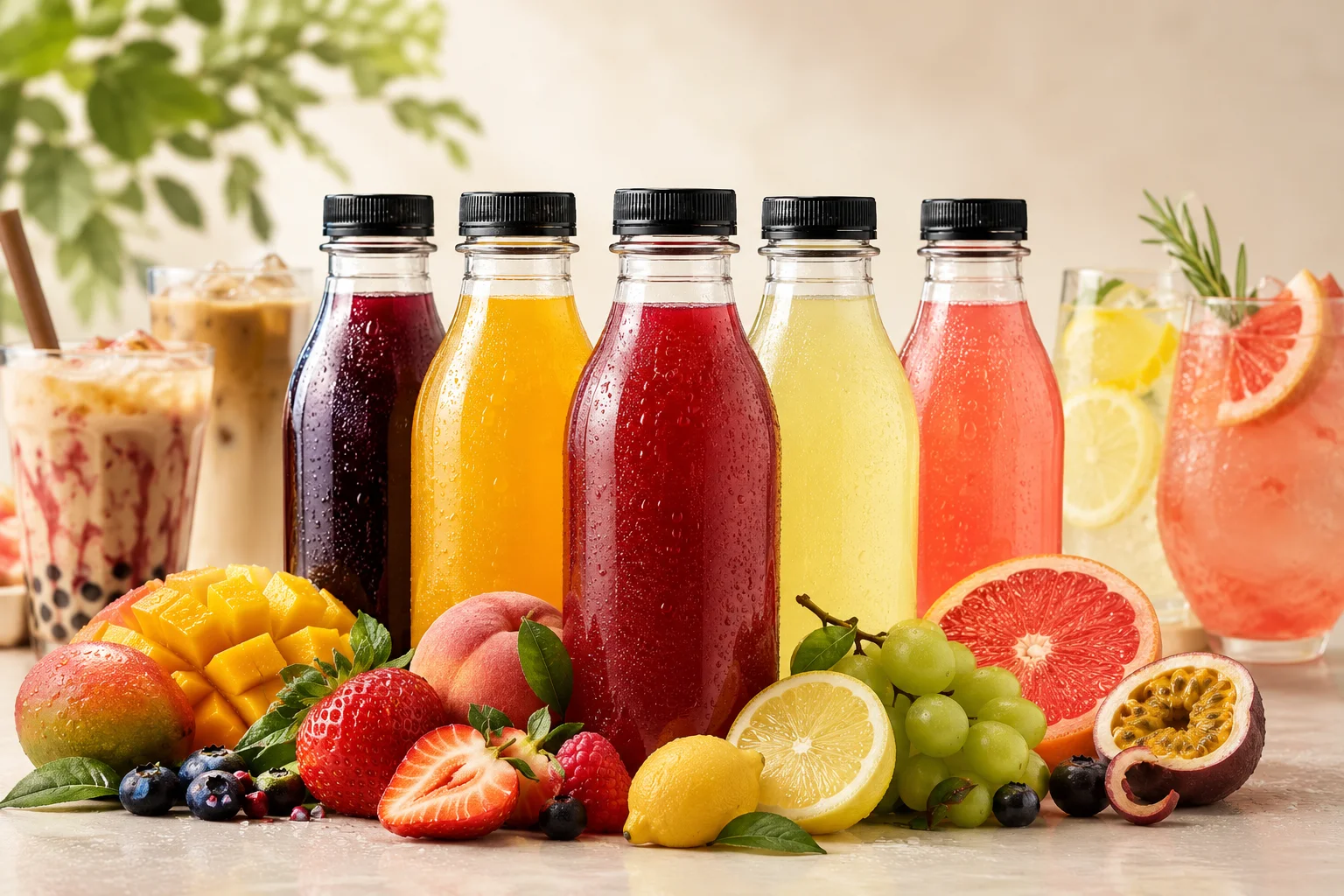
Most "strawberry" syrups don't taste like strawberries. They taste like red — bright, one-note, and sweet, the kind of flavor that comes from a lab and a dye bottle rather than from fruit. For a café trying to build a premium drink menu, that gap matters more than ever.
So what actually separates real fruit syrup from an artificial one, and why should a beverage professional care? Here's a practical guide.
What real fruit syrup actually is
Real fruit syrup is made from actual fruit — fruit juice and puree — so the flavor comes from real fruit and the color is natural rather than a synthetic dye. An artificial syrup, by contrast, is usually flavored sugar water: a base of sugar (often high-fructose corn syrup) carrying synthetic flavoring and artificial color. Both can say "strawberry" on the label. Only one is actually made from strawberries.
How to tell the difference
You don't need a lab to spot the difference. Three quick checks tell you almost everything:
Read the ingredients. In a real fruit syrup, real fruit — juice or puree — is a named, leading ingredient, not "natural and artificial flavors" and Red 40. (Sugar sits near the top of almost any syrup; what matters is whether real fruit is in there too.)
Look at the color. Real, natural coloring tends to be less uniform than a synthetic dye. A neon, perfectly consistent red usually means artificial color.
Taste it in milk. Artificial flavoring often turns sharp or one-dimensional in a latte, while a real-fruit syrup stays rounded and true to the fruit.
Why it matters for your café
This is no longer just a chef's preference — it's what customers are actively looking for. As more guests read ingredient labels before ordering a premium drink, "real fruit" has become one of the clearest signals a café can put on a menu, and it helps support the prices specialty drinks command. The appetite for flavor is there, too: a large share of coffee drinkers flavor their coffee at least some of the time, so the question for an operator isn't whether to offer flavor — it's which flavor your brand stands behind.
What about cost?
A premium ingredient sounds expensive, but syrup is a small slice of a drink's cost and an outsized lever on how that drink is perceived. With beverage margins typically running high, trading up to a real-fruit syrup is one of the easiest ways to justify a premium menu price and protect the quality your customers associate with your brand. The other quiet benefit is consistency: a standardized, shelf-stable real-fruit syrup pours the same drink in every location, every shift.
How to choose a real fruit syrup
When you're comparing options, look for: real fruit as a leading ingredient, no artificial flavors or colors, and reliable consistency batch to batch. If a supplier can't tell you what's actually in the bottle, that's your answer.
The bottom line
Your customers are reading labels, paying more for real ingredients, and tasting the difference in the cup. Building your menu on real fruit instead of artificial flavoring isn't just the cleaner choice — it's the more profitable one.
Umma's Recipe makes real-fruit syrup — real fruit, no artificial flavors or colors — made in Korea in an FDA-registered facility, and built for cafés, bakeries, bars, and bubble tea shops. (The links below will take you to our lineup and wholesale program.)