Real Fruit Syrup vs. Monin vs. Torani: An Honest Comparison for Café Owners
June 27, 2026
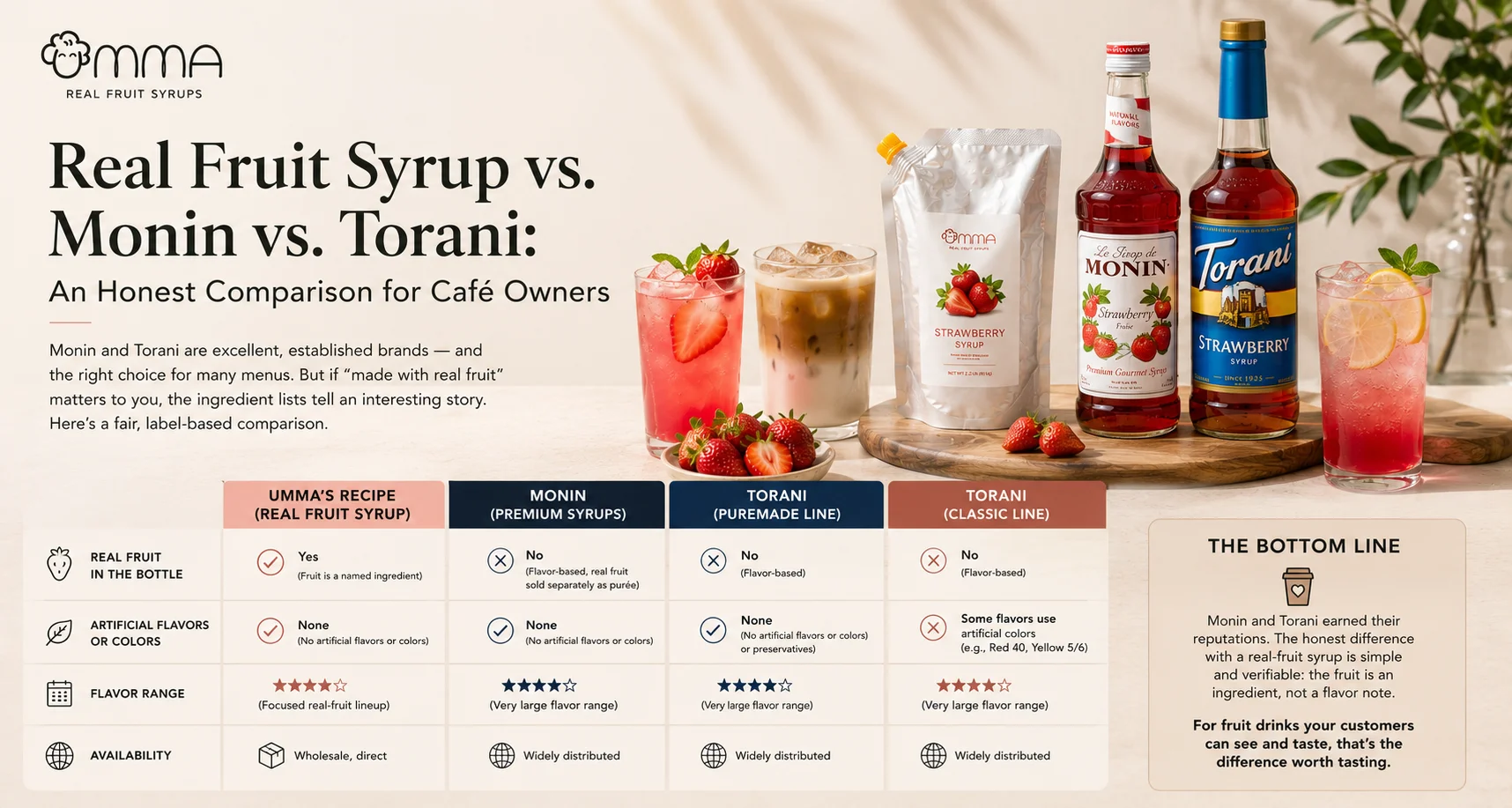
Monin and Torani are the two names most operators reach for, and for good reason: huge flavor ranges, reliable supply, and lines built for foodservice. This isn't a takedown of either. It's a clear-eyed look at one specific question a growing number of cafés care about: which syrups are actually made with fruit — and which are flavored to taste like it?
The answer comes down to reading labels, so that's what this comparison does. (Formulations change, and both brands run multiple lines, so always verify against the current label of the exact product you're buying.)
The key distinction: "made with fruit" vs. "flavored"
Most conventional fruit syrups — including the standard lines from the big brands — are built on natural flavor, not on fruit. The bottle tastes like strawberry because of a strawberry flavor compound, not because strawberries are in it. That's not necessarily "bad"; it's just a different product than a syrup made with real fruit.
Here's where each lands, by published ingredient lists:
Monin (premium syrups): Clean label — natural flavors, natural color (from sources like fruit and vegetable juice or beta-carotene), pure cane sugar, no artificial flavors or colors. Genuinely clean. But the standard fruit syrups are flavor-based: Monin's Strawberry, for example, lists natural flavors and fruit/vegetable juice for color — not strawberry as an ingredient. Monin sells real fruit separately, as a dedicated purée line.
Torani (Classic line): The original Torani fruit syrups are flavor-based and, in several fruit flavors, use artificial color. Torani's own Strawberry lists FD&C Red 40; its Classic Mango lists FD&C Yellow 5 and Yellow 6, plus preservatives. No fruit in the ingredients.
Torani (Puremade line): Torani's clean-label answer — natural flavors, fruit/vegetable juice for color, no artificial flavors, colors, or preservatives. Like Monin's premium line, it's clean but still flavor-based rather than made with fruit.
Umma's Recipe: Made with real fruit — the fruit (strawberry, blueberry, mango, peach, passion fruit, and more) is listed as an actual ingredient — with no artificial flavors and no artificial colors. Produced in Korea in an FDA-registered facility.
A simple comparison
Real fruit in the bottle: Umma's Recipe — yes (named ingredient). Monin premium / Torani Puremade — no (flavor-based; real fruit sold separately as purée). Torani Classic — no.
Artificial flavors or colors: Umma's Recipe — none. Monin premium / Torani Puremade — none. Torani Classic — some flavors use artificial color (e.g., Red 40, Yellow 5/6).
Flavor range: Monin and Torani — very large (200+ between them). Umma's Recipe — a focused real-fruit lineup.
Availability: Monin and Torani — widely distributed. Umma's Recipe — wholesale, direct.
What this means for your menu
If you want the widest possible flavor wall — including coffee-shop staples like vanilla, caramel, and seasonal specialties — Monin and Torani are hard to beat, and their clean lines (Monin premium, Torani Puremade) avoid artificial ingredients. If your priority is fruit drinks where the fruit is actually in the cup — and a menu claim of "made with real fruit, no artificial flavors or colors" that holds up to a label check — that's the specific gap a real-fruit syrup fills.
Many shops use both: a broad flavoring line for coffee and specialty profiles, and a real-fruit line as the backbone of their fruit drinks. There's no rule that says you have to choose one supplier.
The bottom line
Monin and Torani earned their reputations, and their clean lines are a real step up from artificially colored syrups. The honest difference with a real-fruit syrup isn't "more natural across the board" — it's specific and verifiable: the fruit is an ingredient, not a flavor note. For fruit drinks your customers can see and taste, that's the difference worth tasting side by side.
About Umma's Recipe
Umma's Recipe makes real-fruit syrup for wholesale — made with real fruit, no artificial flavors or colors, produced in Korea in an FDA-registered facility. Built for cafés, bakeries, bars, and bubble tea shops. Compare it against whatever you pour now — the links below take you to the lineup and wholesale program.