How Cafés Choose the Right Syrup: A Buyer's Guide for Coffee Shops
June 26, 2026
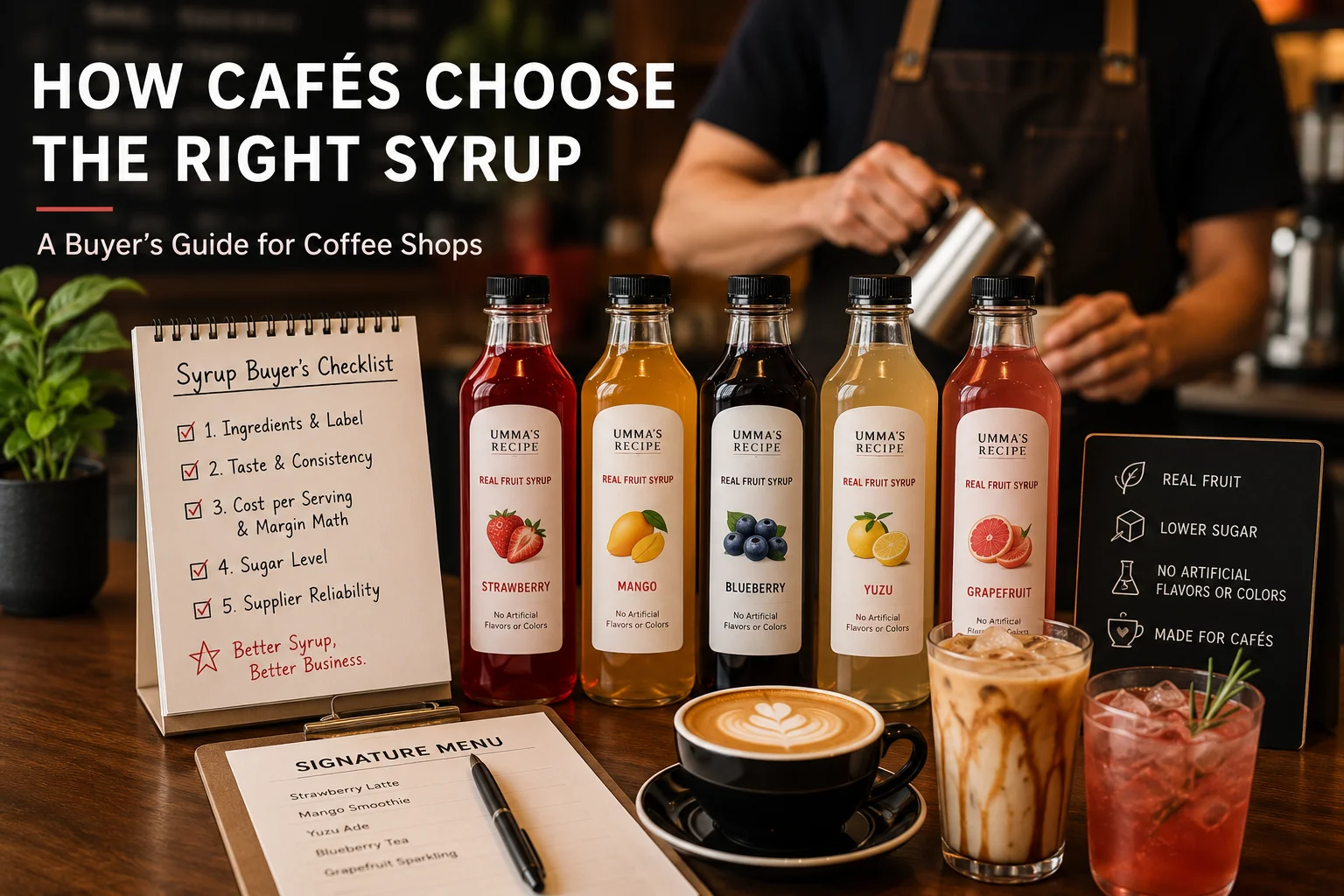
Picking a syrup feels like a small decision. It isn't. The bottle you choose touches three things at once: how your drinks taste, how your menu is perceived, and how much margin you keep. A café pours thousands of flavored drinks a month, so a choice that looks minor on a price list compounds fast.
Here's a practical framework for choosing well — the five factors that actually matter, and the trade-offs behind each.
Ingredients and label
Start with what's actually in the bottle. Is real fruit (or a real extract) a named ingredient, or is it "natural and artificial flavors," artificial color, and high-fructose corn syrup? This isn't just a quality question anymore — customers are reading labels. A real-fruit, no-artificial-flavors-or-colors syrup gives you a menu story you can stand behind, and it's increasingly what specialty-drink buyers expect before they'll pay a premium price.
Taste and consistency
A great syrup tastes true to its source and holds up where it's used. Two quick tests: does it taste rounded and natural in a milk-based drink (artificial flavoring often turns sharp in a latte), and does it pour the same drink every time? Consistency is the quiet superpower of a good wholesale syrup — especially if you run more than one location or rotate staff. A standardized, shelf-stable syrup removes the variability you'd get from making everything from scratch.
Cost per serving — and the margin math
Cheap-per-bottle isn't the same as cheap-per-drink. What matters is cost per serving and what that pour does to the perceived value of the drink. Consider the math: a syrup pour is usually a small slice of a drink's total cost, while beverage margins typically run very high. Trading up from a bargain flavoring to a premium real-fruit syrup might add a few cents per drink — but it can justify a higher menu price and protect the quality customers associate with your brand. Optimizing for the cheapest possible pour often costs you more in perception than it saves in pennies.
Sugar level
Sugar level is no longer a niche concern. Many customers now watch added sugar, so it's worth knowing how much a syrup carries and how that fits your menu and your guests. As the category moves toward clean-label drinks, being able to talk about what's in your syrups — and to build lighter, less-sweet drinks when customers want them — is easier to plan for now than to retrofit later.
Supplier reliability
Finally, look past the product to the partner. Can the supplier keep you in stock, ship on a schedule that fits your volume, offer wholesale pricing that scales, and help you build the right lineup for your menu? A syrup that's perfect on paper but constantly out of stock will quietly break your menu. Reliable supply and real support are part of the product.
How real fruit changes the equation
Notice that most of these factors point the same direction. Real fruit improves taste and label and supports a premium price, which protects margin. That's why "what's actually in the bottle" tends to be the decision that cascades into all the others.
A simple decision checklist
When you compare options, ask:
Is real fruit (or a real extract) a named ingredient — with no artificial flavors or colors?
Does it taste true to source and stay consistent batch to batch?
What's the cost per serving, and does it support the menu price I want to charge?
Does the sugar level fit my menu and my customers?
Can the supplier keep me stocked and support my menu as I grow?
If a supplier can't answer the first question clearly, you usually don't need to ask the rest.
The bottom line
The right syrup isn't the cheapest one — it's the one that makes your drinks taste better, supports a premium price, and shows up reliably every week. Choose for what's in the bottle and the partner behind it, and the margins tend to follow.