Lower-Sugar Syrup: How to Cut Sugar Without Killing the Flavor
June 26, 2026
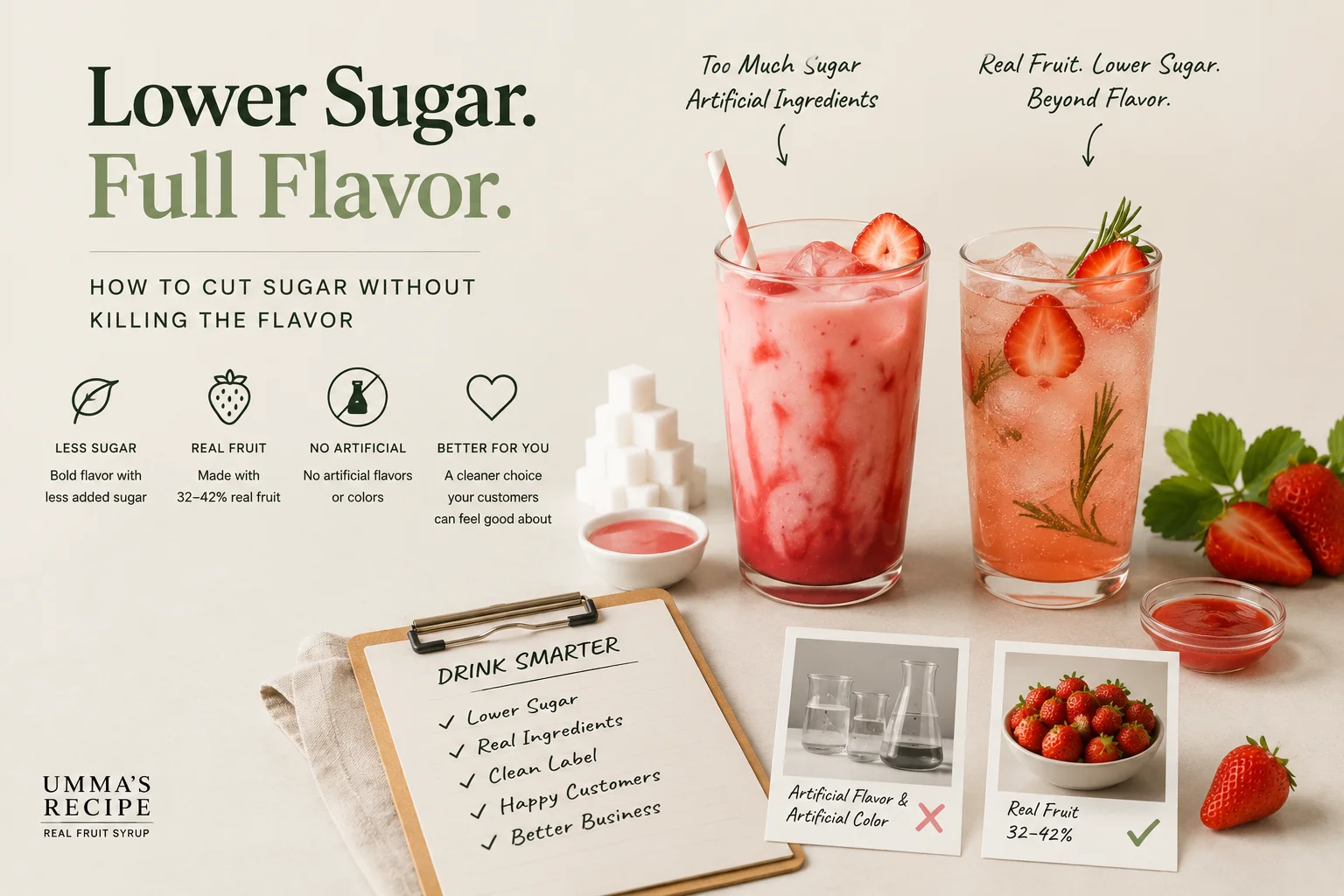
Sugar is the quiet problem in most flavored drinks. A conventional flavoring syrup is, by design, mostly sugar — that's where the body and much of the perceived flavor come from. As more customers watch what they drink and read labels, that's becoming a real constraint on menus built around sweet syrups.
But "less sugar" gets confusing fast, because there are two very different ways to get there. Understanding the difference is the key to choosing well.
Lower sugar vs. sugar-free: not the same thing
A sugar-free syrup usually replaces sugar with artificial or high-intensity sweeteners like sucralose or stevia. That can lower calories, but it comes with trade-offs: a noticeable aftertaste for some drinkers, inconsistency in cold drinks (some sugar-free syrups separate in cold brew), and — importantly — it moves you away from a clean label rather than toward one.
A lower-sugar real-fruit syrup takes a different path. Instead of swapping in lab sweeteners, it leans on real fruit to carry flavor, so you simply need less added sugar to get a bold result. You're reducing sugar by using better ingredients, not by adding synthetic ones. For a brand that wants a clean, premium story, that distinction matters.
Why real fruit lets you use less sugar
Real fruit brings its own flavor, aroma, and a measure of natural sweetness. When the fruit is doing the flavoring — rather than a synthetic compound that needs a heavy sugar base to feel "full" — you can reach a satisfying, true-to-fruit taste at a lower added-sugar level. Concentration helps, too: a quality real-fruit syrup is flavorful enough that a smaller pour does the job, which lowers the sugar in the finished drink even further.
This is exactly why real-fruit content matters. Umma's Recipe syrups are made at 32–42% real fruit, which is what allows bold flavor at a lower added-sugar level than typical flavoring syrups — without reaching for artificial sweeteners.
Why it matters for your menu
Lower sugar isn't a niche request anymore; it's a direction the whole beverage category is moving in. Offering drinks built on a lower-sugar, real-fruit syrup lets you:
Serve health-minded customers without a separate "diet" product that tastes like one.
Tell a genuine clean-label story — real fruit, lower sugar, no artificial flavors or colors — that supports a premium price.
Keep flavor and consistency, because you're not fighting the off-notes that come with some artificial sweeteners.
It's a "better for you" angle that doesn't ask your customers to compromise on taste.
How to evaluate sugar in a syrup
When you compare options, look past the marketing words on the front:
Check the sweetener type. Is sweetness coming from real fruit and a modest amount of sugar, or from artificial sweeteners?
Look at real-fruit content. More real fruit generally means flavor can carry at lower added sugar.
Consider the pour. A concentrated, flavorful syrup lets you use less, which lowers sugar in the cup.
Taste it cold and in milk. Make sure flavor holds up where you'll actually use it.
A simple way to dial it in
You don't have to rebuild your menu to cut sugar. Start by using a flavorful real-fruit syrup so a slightly smaller pour still delivers, and pair it with unsweetened bases — sparkling water, unsweetened tea, or milk — so the fruit, not added sugar, leads the drink. Small adjustments add up across a menu.
The bottom line
The goal isn't to strip flavor out of your drinks — it's to get the flavor from real fruit instead of a pile of sugar or a synthetic sweetener. A lower-sugar, real-fruit syrup lets you do exactly that: a cleaner label, a "better for you" story, and a drink that still tastes like the fruit on the menu.